
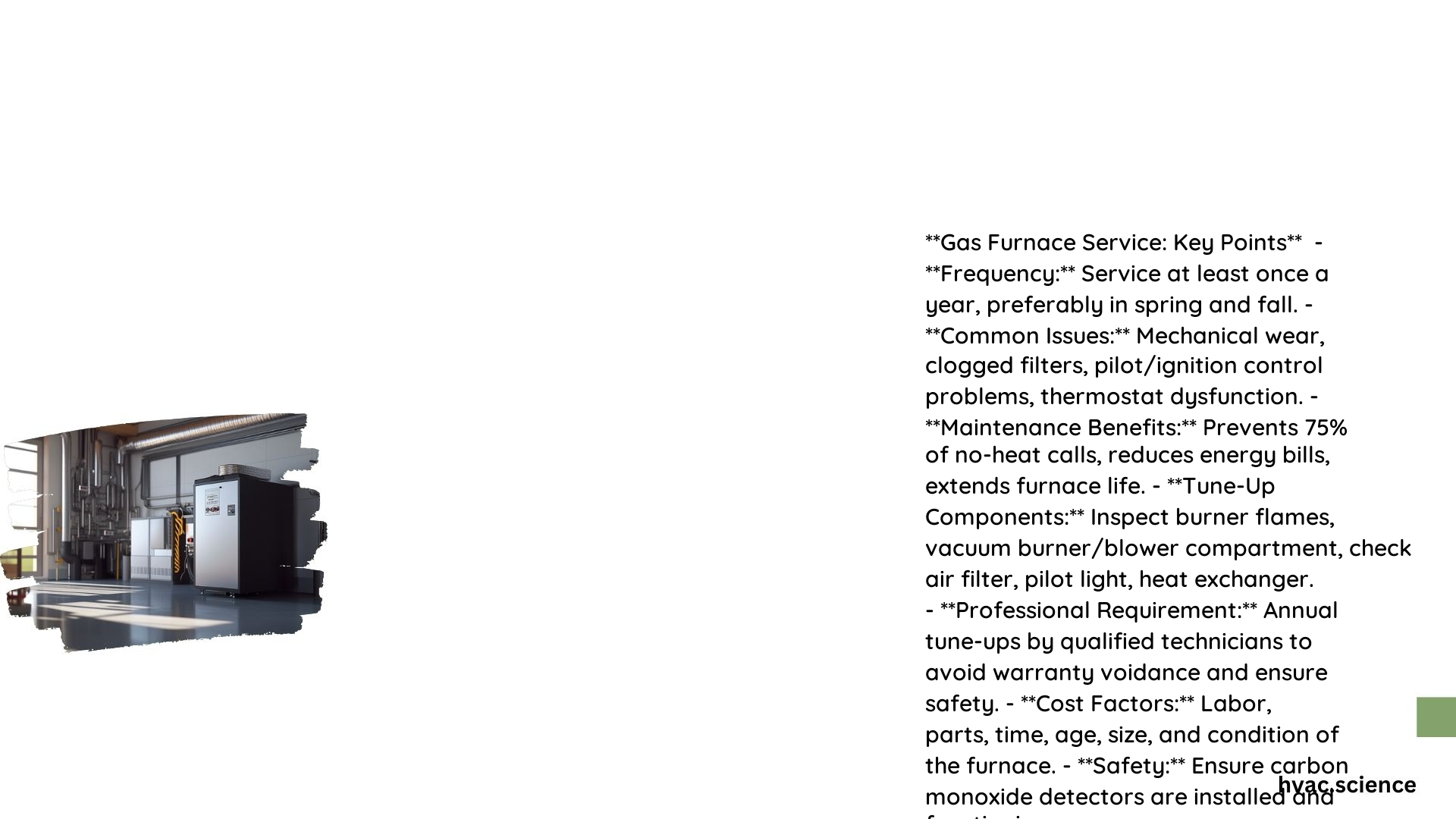
Comprehensive Guide for Gas Furnace Service
1. What is the Importance of Annual Maintenance for a Gas Furnace?
Annual maintenance is crucial for the optimal performance, safety, and efficiency of your gas furnace. Here is a detailed checklist of tasks to be performed:
- Change the Filters:
- No pets: Every 90 days
- With pets: Every 60 days
- If someone in your home has allergies: Every 30-45 days
-
Regular filter changes prevent dirt and debris buildup, ensuring better airflow and efficiency.
-
Clean the Burners:
- Remove and clean the burners every time you change the filters. Turn off the furnace and gas valve, vacuum or wipe down the burners, and clean the flame sensor.
-
This helps prevent soot and condensation from prematurely aging the furnace.
-
Check the Gas Line:
-
Listen for hissing sounds or smell for propane leaks starting from the shut-off valve. If detected, shut off the main valve and call a professional.
-
Inspect the Heat Exchanger:
-
A professional should inspect the heat exchanger for cracks, holes, or leaks. This is critical for safety and efficiency.
-
Inspect the Flue System:
-
Ensure the flue pipe and ductwork are clear and unobstructed. Check for leaks, rust, or water streaks on the vent or flue.
-
Check Thermostat:
-
Test the thermostat for functionality and accuracy. Ensure it is free from dust and debris. Recalibrate if necessary.
-
Test Ignition and Flame:
-
Cycle the furnace on and off to check ignition and flame performance. Adjust the pilot valve or replace the ignitor if necessary.
-
Flush Drains and Traps:
-
Clear the furnace’s drains and traps to prevent condensation accumulation. Check for loose connections, cracks, or holes in the condensate drain line.
-
Lubricate Motors and Bearings:
- Clean and lubricate internal furnace components to extend their life and prevent failure.
2. What is Involved in a Furnace Tune-Up?
A furnace tune-up is a comprehensive service that includes both DIY and professional tasks.
-
Tools Required: Basic tools include a vacuum cleaner, soft cloths, and lubricants. Professionals may use specialized equipment like inspection cameras.
-
Time Required: A DIY tune-up can take a few hours, while a professional tune-up typically takes 1-2 hours, depending on the complexity of the tasks.
-
Costs:
- DIY: Costs are minimal, mainly involving filter replacements and lubricants.
- Professional: Costs vary but typically range from $100 to $300, depending on the service provider and the extent of the maintenance.
3. What is Preventative Maintenance for a Gas Furnace?
Preventative maintenance is essential for maintaining the efficiency and longevity of your gas furnace.
- Frequency: Annual maintenance is recommended, with some tasks performed more frequently (e.g., filter changes).
- Cost Savings: Regular maintenance can save homeowners money by reducing energy bills and preventing costly repairs. For example, a well-maintained furnace can save up to 10% on heating bills.
4. What are the Benefits of Regular Gas Furnace Servicing?
Regular servicing offers several benefits:
- Improved Efficiency: Maintained furnaces operate more efficiently, reducing energy consumption.
- Extended Lifespan: Regular maintenance extends the lifespan of the furnace by preventing wear and tear on components.
- Enhanced Safety: Maintenance checks for potential safety hazards like gas leaks and carbon monoxide buildup.
- Lower Energy Bills: Efficient furnaces consume less energy, leading to lower utility bills.
5. How Can I Ensure Safe and Efficient Operation of My Gas Furnace?
To ensure safe and efficient operation, follow these steps:
- Regular Checks: Periodically check for signs of leaks, unusual noises, or erratic flames.
- Safety Checks: Ensure carbon monoxide detectors are installed and tested monthly. Replace batteries annually.
- Signs of Issues: Watch for signs like cold air blowing, frequent cycling, or vast temperature swings, which may indicate thermostat or ignition issues.
6. What Local Regulations and Codes Apply to Gas Furnaces?
Local regulations and codes vary but generally include:
- Venting Requirements: Ensure vents are clear, unobstructed, and meet local clearance standards (e.g., 12 inches above snow accumulation level).
- Clearances: Maintain required clearances around the furnace to prevent fire hazards.
- Safety Inspections: Regular safety inspections may be mandated by local authorities to ensure compliance with safety standards.
7. How Do Local Energy Costs and Climate Impact Gas Furnace Performance?
Local energy costs and climate conditions significantly affect furnace performance and efficiency:
- Seasonal Adjustments: Adjust thermostat settings based on seasonal changes to optimize efficiency. For example, lowering the temperature when not at home can save energy.
- Climate Considerations: In colder climates, more frequent maintenance may be necessary to ensure the furnace can handle the increased load.
8. What Local Rebates and Incentives are Available for Gas Furnace Upgrades?
Many regions offer rebates and incentives for upgrading to more efficient gas furnaces:
- Eligibility Criteria: Typically includes purchasing a furnace with a high AFUE (Annual Fuel Utilization Efficiency) rating and meeting specific installation standards.
- Application Process: Homeowners should check with local utility companies or government websites for available rebates and application procedures.
References
- Your Complete Gas Furnace Inspection Checklist – Angi
- A Heating Professional’s Furnace Maintenance Checklist – Hoover
- What’s on a Furnace Tune Up Checklist? – Sanborn’s AC & Heating