
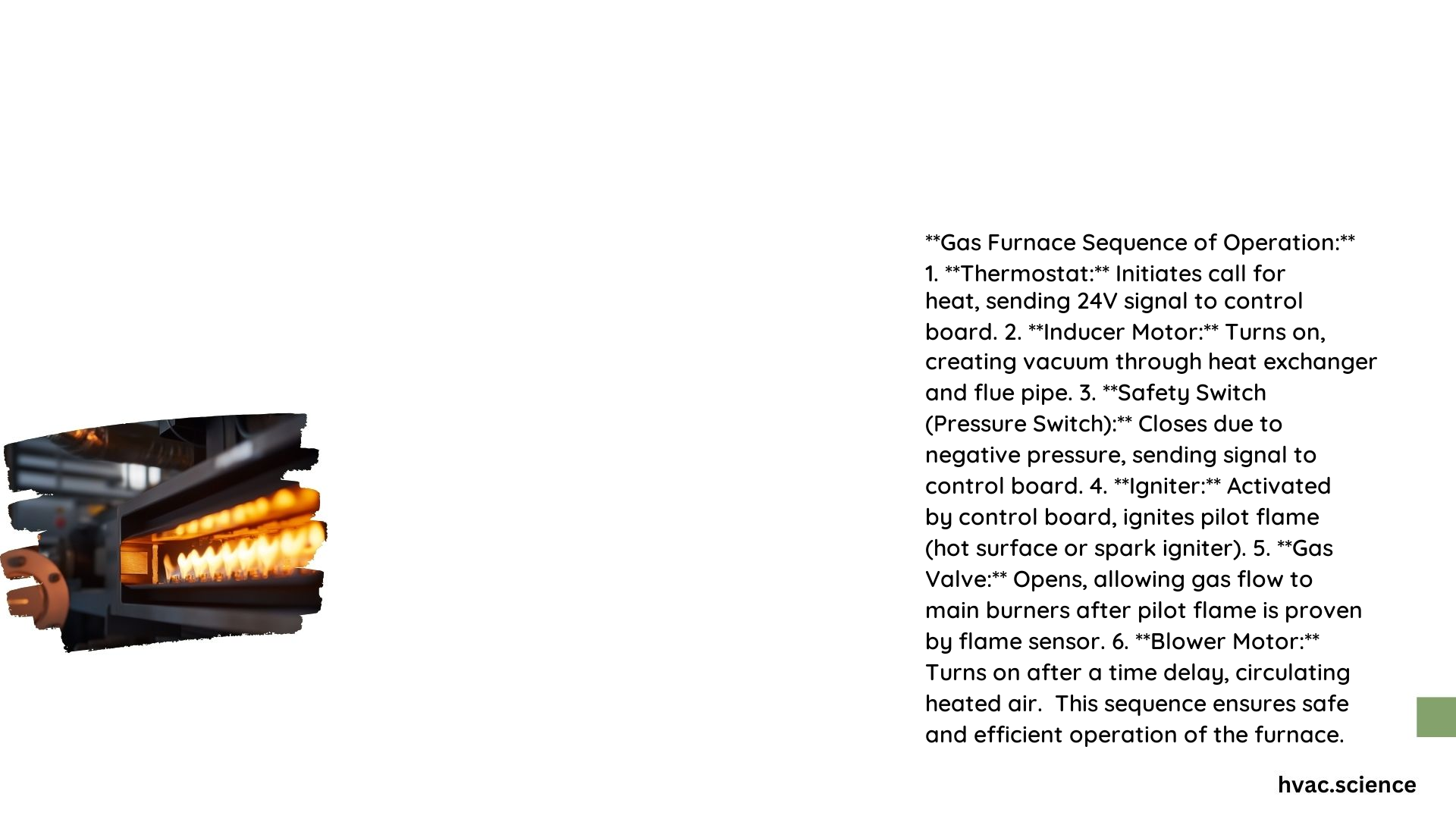
The sequence of operation for a gas furnace is a critical series of steps designed to ensure safe and efficient operation. Understanding this sequence is crucial for troubleshooting and maintaining your home’s heating system.
The 7-Step Gas Furnace Sequence of Operation
Quick Summary: The gas furnace sequence of operation is a standardized safety cycle consisting of seven key steps: 1) Call for heat, 2) Draft inducer activation, 3) Pressure switch verification, 4) Igniter activation, 5) Gas valve opening, 6) Flame sensor verification, and 7) Blower motor circulation.
Gas Furnace Troubleshooting Checklist by Component
Use this step-by-step checklist to identify where the sequence of operation is failing:
- Thermostat: Ensure it is set to ‘Heat’ and the temperature is above room temp. Check for 24V at the W terminal.
- Inducer Motor: If it doesn’t start, check for 120V power and capacitor failure.
- Pressure Switch: If the inducer runs but the igniter doesn’t glow, check for blocked vents or a cracked hose.
- Igniter: If it doesn’t glow, check for continuity (cracks) or proper voltage (120V for HSI).
- Flame Sensor: If the burners light but go out after 3 seconds, clean the flame sensor with steel wool.
What is the Function of Pressure Switch and Inducer Motor?
What is the Function of the Pressure Switch?
The pressure switch is a safety device that ensures the draft inducer motor is creating sufficient negative pressure before allowing the furnace to proceed with the ignition sequence. If the pressure switch does not close, the furnace will not ignite, preventing potential safety hazards.
What is the Function of the Inducer Motor?
The inducer motor is responsible for creating the necessary draft to vent combustion gases safely. It starts before the ignition sequence to ensure proper venting and is monitored by the pressure switch to confirm its operation.
How Does the Ignition System Process Work?
The ignition system involves several steps to ensure safe and reliable operation:
- Igniter Activation: The igniter is activated by the control board after the draft is proven. It heats up to a high temperature to ignite the gas when the gas valve opens.
- Gas Valve Opening: The gas valve opens only after the igniter is confirmed to be glowing, ensuring that the gas will be ignited immediately upon release.
- Flame Proven: The flame sensor verifies that a flame is present, and if not, the furnace will shut down to prevent gas accumulation.
How Does the Blower Motor Operation Work?
In some gas furnaces, the blower motor may turn on temporarily right after the inducer motor to help in the initial venting process or to ensure that the system is clear of any residual gases. This is part of the safety protocol to ensure that the furnace operates efficiently and safely.
What is the Sequence of Operation for a 2-Stage Gas Furnace?
A 2-stage gas furnace differs from a single-stage system in that it has two levels of heat output:
- Low Fire: The furnace operates at a lower capacity during mild weather, which can improve efficiency and reduce wear on the system.
- High Fire: During colder weather, the furnace switches to a higher capacity to provide more heat. The sequence of operation remains largely the same, but the control board adjusts the gas flow and burner operation to achieve the different stages.
Comparison: Single-Stage vs. Two-Stage Operation
| Feature | Single-Stage Furnace | Two-Stage Furnace |
|---|---|---|
| Heat Output | 100% capacity always | Low Fire (60-70%) or High Fire (100%) |
| Inducer Motor | Single speed | Two speeds (Low/High) to match heating stage |
| Efficiency | Standard | Higher (longer run times at lower capacity) |
| Thermostat Signal | W1 only | W1 (Low) and W2 (High) |
Understanding these differences is vital when troubleshooting control board issues, as the sequence timing may vary between stages.
What are the Technical Details and Troubleshooting Methods?
- Measurements and Timings: The exact timings and measurements can vary depending on the furnace model and manufacturer. However, typical delays include a few seconds for the igniter to heat up and for the gas valve to open after the igniter is confirmed to be glowing.
- Specifications: Understanding the specific specifications of the furnace, such as the type of ignition system and the configuration of the safety switches, is crucial for effective troubleshooting. Referencing the manufacturer’s service manual is often necessary.
Safety Standards & Authority References
For technical specifications and safety codes, refer to the following standards:
- NFPA 54 (National Fuel Gas Code): The primary standard for the installation of gas piping and equipment. View NFPA 54.
- ASHRAE Standard 90.1: Guidelines for energy-efficient heating system operation. View ASHRAE Standards.
- International Mechanical Code (IMC) Chapter 12: Regulations covering mechanical systems and venting requirements.