
Introduction
You walk into your living room, expecting a blast of cool air, but instead, you’re greeted by a puddle on the floor. Seeing water dripping from a mini split indoor unit is a sinking feeling for any homeowner. It immediately raises questions: Is the unit broken? Will this ruin my drywall? How much will this cost?
Here is the reality: A leaking mini-split is rarely a sign of catastrophic failure. In my years diagnosing HVAC systems, I’ve found that 90% of these leaks stem from maintenance oversights rather than mechanical breakdowns. Whether it is a clogged drain line or a frozen coil, the physics of condensation are usually trying to tell you something specific about your system’s health.
In this guide, we will move beyond generic advice. We will look at the specific standards set by organizations like AHRI and ASHRAE to understand exactly why your unit is leaking and how to fix it with precision.
TL;DR Summary
-
Most Common Cause: A clogged condensate drain line caused by algae or mold.
-
Quick Fix: Use a wet/dry vac to pull the clog from the drain line termination point outside.
-
Critical Check: Ensure your unit is tilted correctly (approx. 1/4 inch slope) per manufacturer specs.
-
Safety First: If you suspect a refrigerant leak, EPA regulations require a certified technician.

1. The Mechanics of Condensation
To troubleshoot effectively, you need to understand where the water comes from. Your mini-split isn’t creating water; it is extracting it. When the evaporator coil cools the air, humidity condenses into liquid water—often up to 2-5 pints per hour in humid conditions according to AHRI Certified ratings.
Normally, this water drips into a drain pan and flows out through a condensate line. When this pathway is disrupted, gravity takes over, and water finds the path of least resistance: usually down your wall. This process is similar to ducted heat pump condensation, but because the mini-split head is mounted directly in your living space, the margin for error is zero.
2. The #1 Culprit: Clogged Condensate Drain Line
If I had to bet on why you have water dripping from your mini split indoor unit, I would put my money on a clogged drain line.
Why it happens
The moist environment inside the drain line is a breeding ground for biological growth. ASHRAE Standard 62.1 highlights that HVAC drain pans and lines require regular cleaning to prevent microbial growth. Over time, algae, mold, and dust form a sludge that blocks the flow.
The Fix
-
Locate the drain: Find the white PVC or corrugated hose exiting your home (usually near the outdoor unit).
-
Vacuum it out: Take a wet/dry vacuum and seal it around the end of the drain line. Run it for 10-15 seconds. This suction is often enough to dislodge the biological plug.
-
Test it: Pour a small amount of water onto the indoor coil (carefully) to see if it drains freely outside.
Pro Tip: Avoid using harsh chemicals like bleach if your drain line runs into a garden or if the manufacturer advises against it. Vinegar is a safer, albeit milder, alternative for maintenance.
3. Dirty Air Filters Causing Frozen Coils
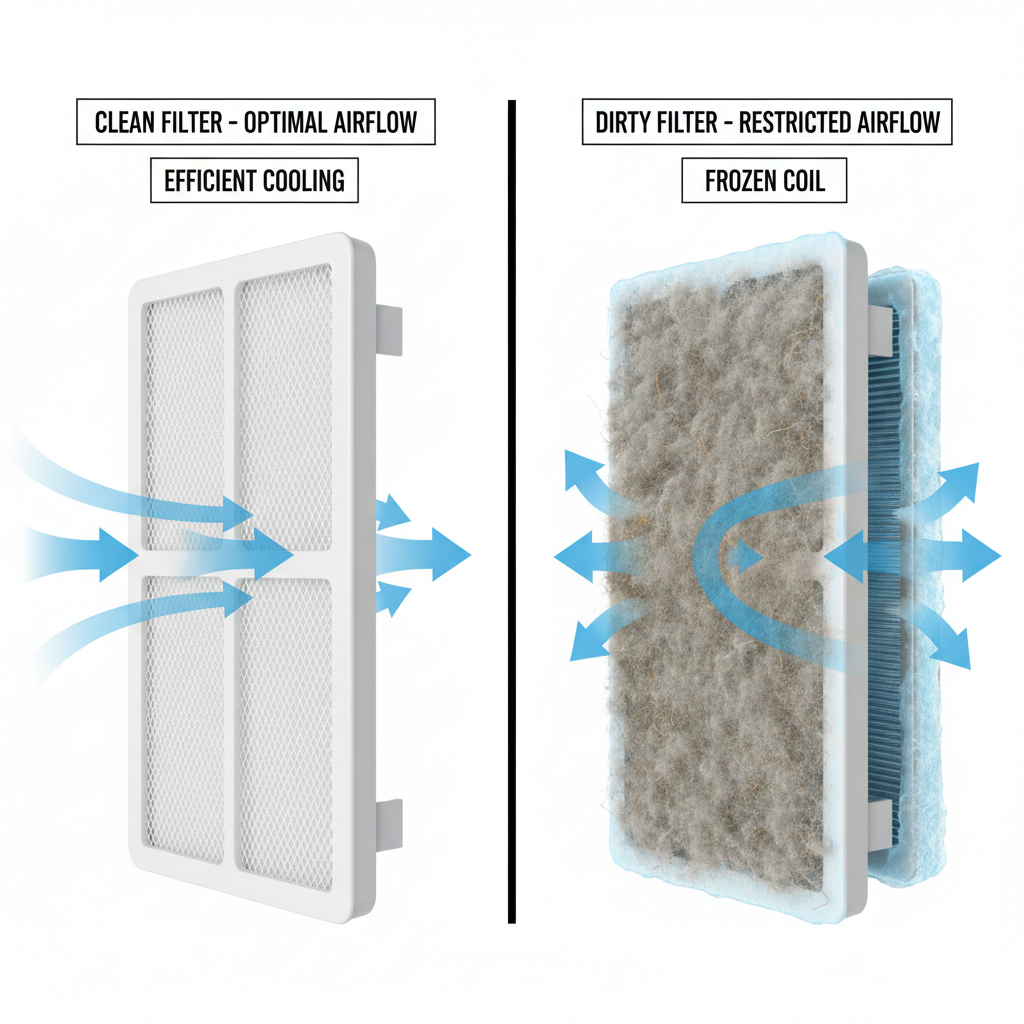
It sounds counterintuitive, but a lack of airflow can cause a water leak. A 2020 study by the U.S. Department of Energy found that dirty filters can reduce airflow by up to 30%.
When airflow is restricted, the evaporator coil gets too cold because there isn’t enough warm air passing over it to keep the refrigerant boiling off. The coil freezes, turning into a block of ice. When the unit cycles off, that ice melts rapidly—often overwhelming the drain pan and causing an overflow.
Maintenance Routine
Check your filters every 2-4 weeks. If you can’t see through the mesh, it’s time to clean them. This simple step is the most effective way to prevent a mini split heat pump dripping water.
4. Damaged or Rusted Drain Pan
The drain pan is the catch basin that sits underneath your coils. Over time, especially in plastic pans, cracks can develop due to thermal expansion and contraction. In older metal units, rust is the enemy. The ASHRAE Handbook notes that drain pans can degrade significantly after 5-10 years, particularly in coastal areas with salty air.
If the pan is cracked, water will bypass the drain line entirely. Inspecting the heat pump drain tray usually requires removing the plastic casing of the indoor unit. If you see water dripping from the back of the unit rather than the front louvers, a damaged pan or a bad connection between the pan and the hose is a likely suspect.
5. Low Refrigerant Levels
Low refrigerant is a more serious mechanical issue. When refrigerant is low, the pressure drops, which ironically causes the indoor coil to freeze over (similar to the dirty filter scenario).
How to diagnose:
-
You hear hissing noises.
-
The air isn’t blowing cold.
-
You see ice building up on the coil.
If you suspect this, do not attempt a DIY fix. The EPA Section 608 regulations define refrigerant leaks as an issue requiring certified technicians. Handling refrigerant without certification is illegal and dangerous. A technician will typically check the heat pump low pressure port to verify the charge and locate the leak.
6. Improper Installation (The Tilt Factor)
Gravity is the engine that drives drainage in most mini-splits. If the unit was installed perfectly level—or worse, tilted slightly away from the drain hole—water will pool in the tray until it spills over.
According to Trane’s official troubleshooting resources, improper installation is a frequent cause of leaks. While many installers aim for “level,” some manufacturers recommend a very slight pitch toward the drain outlet to facilitate flow.
- The Standard: AHRI suggests a minimum slope for drain lines (1/8 inch per foot), and the indoor unit itself must be mounted securely to prevent sagging over time.

FAQ: Troubleshooting Your Mini Split Leak
Why is my brand new mini-split leaking?
If the unit is new, it is almost certainly an installation error. The drain line may be kinked inside the wall, or the unit may not be mounted flush against the wall, causing the drain pan to tilt backward.
Can I use bleach to clean the drain line?
While effective at killing algae, bleach can corrode certain plastic components and metal sensors. Warm water and vinegar are generally safer for routine maintenance.
How much water should be dripping outside?
In high humidity, seeing a steady drip (2-5 pints per hour) from the outdoor drain line is a sign of a healthy system. It means the water is leaving your home effectively.
Is this related to my water heater?
Generally, no. Your cooling system is separate. However, proper condensate management is a universal HVAC requirement. Whether you are dealing with a cooling leak or installing a heat pump water heater for cold climate, ensuring water has a clear path to drain is critical to preventing property damage.
Conclusion
Water dripping from a mini split indoor unit is usually a cry for maintenance, not a death knell for the system. By systematically checking the drain line, filters, and installation angle, you can resolve the majority of these issues yourself.
However, recognize your limits. If you see ice that returns immediately after thawing or suspect a refrigerant issue, call a pro. Proper maintenance doesn’t just stop leaks; it ensures your system runs efficiently for years to come.
Key Takeaway: Start with the drain line. It’s the easiest fix and the most common problem. If that doesn’t work, check the filters. Only after ruling these out should you worry about mechanical failure.
Sources
-
Trane, “Troubleshooting Ductless Systems: Mini Split Leaking Water“
-
Pioneer Mini Split, “Why Your Mini Split May Be Leaking Water & How to Stop It“
-
ASHRAE, Standard 62.1 – Ventilation for Acceptable Indoor Air Quality.
-
U.S. Department of Energy, Research on filter impact on airflow (2020).