
An electric heat pump is an innovative energy-efficient mechanical system that transfers heat between indoor and outdoor environments, providing both heating and cooling capabilities. Unlike traditional heating systems that generate heat, heat pumps move existing heat, making them significantly more energy-efficient and environmentally friendly for residential and commercial temperature management.
What Exactly is an Electric Heat Pump?
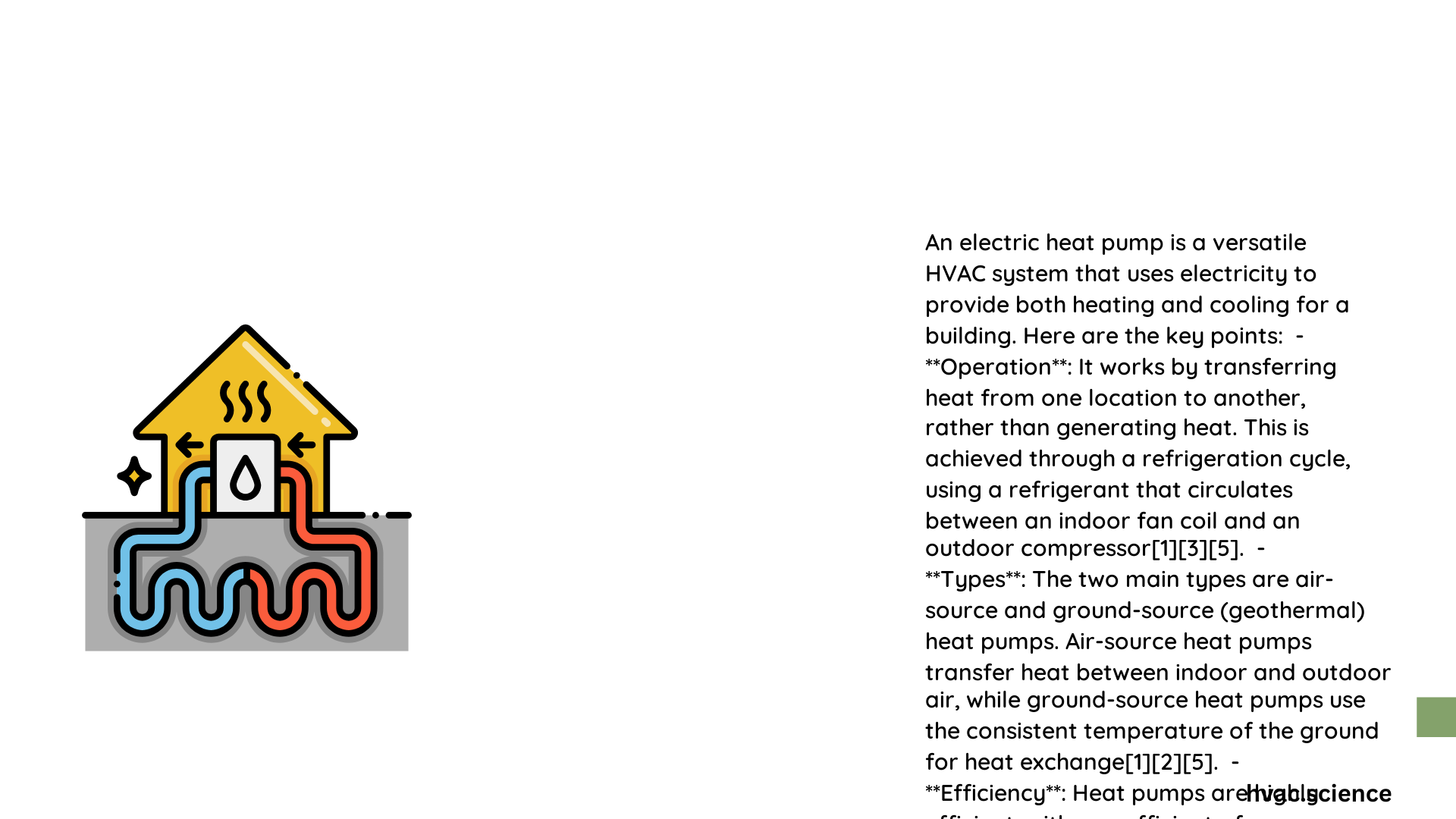
Electric heat pumps represent a sophisticated thermal transfer technology that moves heat from one location to another using refrigeration principles. These systems can extract warmth from outside air, ground, or water sources and transfer it inside during cold months, while reversing the process during warmer periods.
How Do Electric Heat Pumps Function?
Core Operational Mechanism
Electric heat pumps operate through a sophisticated refrigeration cycle involving four critical components:
- Compressor
- Pressurizes refrigerant
- Increases temperature and pressure
-
Drives heat transfer process
-
Condenser Coils
- Release absorbed heat
- Transform refrigerant from gas to liquid state
-
Facilitate thermal energy exchange
-
Expansion Valve
- Reduces refrigerant pressure
- Enables rapid cooling
-
Controls refrigerant flow
-
Evaporator Coils
- Absorb surrounding heat
- Cause refrigerant to evaporate
- Initiate heat transfer mechanism
Performance Metrics for Electric Heat Pumps
| Metric | Description | Typical Range |
|---|---|---|
| COP (Coefficient of Performance) | Heating efficiency ratio | 2.5 – 4.5 |
| SEER (Seasonal Energy Efficiency Ratio) | Cooling efficiency measurement | 15 – 22 |
| Energy Savings | Compared to traditional systems | 30% – 60% |
What Makes Electric Heat Pumps Unique?
Advantages
- Energy Efficiency: Transfers heat instead of generating it
- Dual Functionality: Provides both heating and cooling
- Lower Operating Costs: Reduced energy consumption
- Environmentally Friendly: Minimal carbon emissions
Potential Limitations
- Initial Installation Cost: Higher upfront investment
- Performance in Extreme Temperatures: Reduced efficiency
- Complexity of Installation: Requires professional expertise
Types of Electric Heat Pumps
- Air-Source Heat Pumps
- Most common residential solution
- Lower installation costs
-
Suitable for moderate climates
-
Ground-Source Heat Pumps
- Highest efficiency
- Stable performance
-
Significant installation complexity
-
Water-Source Heat Pumps
- Requires water body access
- Consistent thermal transfer
- High initial investment
Installation Considerations
Key Factors
- Professional assessment of home’s thermal characteristics
- Proper system sizing
- Compliance with local building codes
- Electrical system compatibility
Average Installation Costs
- Residential systems: $3,000 – $10,000
- Commercial systems: $10,000 – $25,000
Maintenance Requirements
- Regular filter cleaning
- Annual professional inspection
- Refrigerant level checks
- Coil and fan maintenance
Conclusion
Electric heat pumps represent a cutting-edge solution for efficient home temperature management, offering significant advantages over traditional heating and cooling systems. By understanding their operational principles, homeowners can make informed decisions about implementing this advanced technology.
Recommended Next Steps
- Consult HVAC professional
- Assess home’s thermal requirements
- Compare system types
- Evaluate long-term energy savings potential